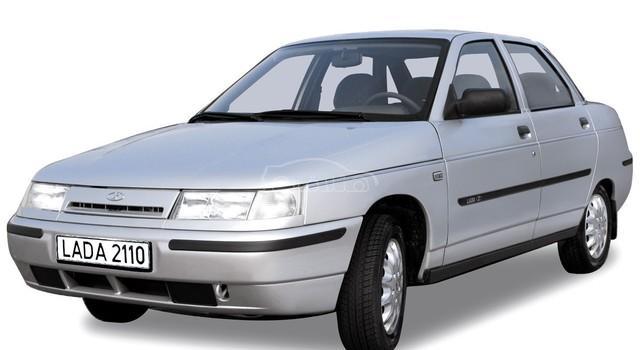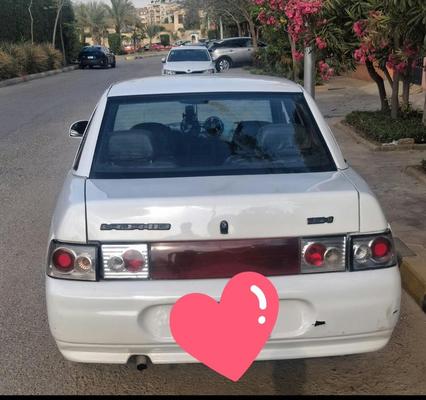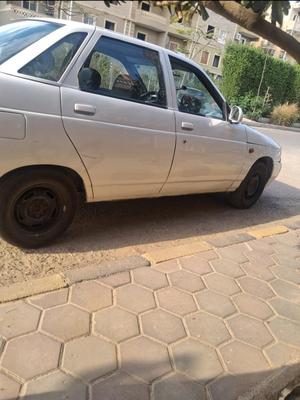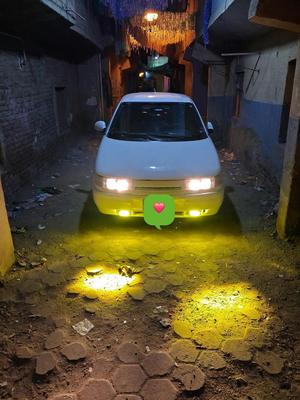


The Egyptian version differs from the Russian in appearance, as it has crystal headlights and a different nickel front grille, in addition to other differences in specifications. The differences also increase in that the Russian version has power and is smoother to drive than the Egyptian version. It has a regular front grille and traditional headlights.
Production of the Russian version was discontinued and launched in Egypt in 2007. Global production began in 1996, and the Egyptian version continued from 2005 to 2009.
The Egyptian version features a 1.6-liter, 8-valve, 4-cylinder, fully overhead cam engine with electronic injection, producing 86 hp at 5,600 rpm. It can accelerate from 0 to 100 km/h in 13.5 seconds and has a top speed of 185 km/h. It is mated to a 5-speed manual transmission and has a 50-liter fuel tank.
The Russian version comes with a 1.5-liter, 16-valve, 4-cylinder, electronically injected engine with 94 hp at 5,600 rpm. The car accelerates in 12 seconds, with a top speed of 185 km/h. It has a 5-speed manual transmission and a 50-liter fuel tank.
The car's drawback is that the engine can overheat in some cases. This can be addressed by installing a temperature control system, after which the car can be driven long distances without problems. It is also fuel-efficient and comes with a front-wheel drive system. The engine sound is average, not loud, not low, and not quiet.
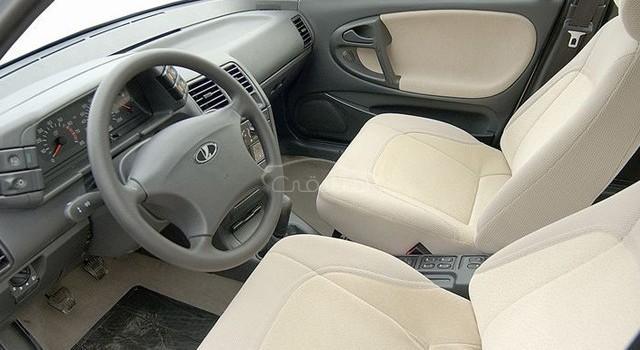
The car's interior is very comfortable and spacious even for travel. The Egyptian version of the car is 4.265 meters long, 1.875 meters wide, 1.420 meters high, and has a wheelbase of 2.492 meters. The dimensions of the Russian version of the car are 4.265 meters long, 1.875 meters wide, 1.420 meters high, and a wheelbase of 2.492 meters. The interior has a good dashboard, a distinctive interior, comfortable and spacious seats, and a backrest for the sofa.
Spare parts for the 2110 are available in select stores, and their prices are reasonable and average between those for the Lada 2107 and Korean cars, which are more expensive. The car's power means that bodywork is limited, especially in accidents. Car breakdowns are rare, but there are some complaints about the difficulty of repairing the cables. Ultimately, spare parts can be found, even with some effort, at dealers specializing in Lada cars in Tawfikiya, Faisal, and other areas, whether for the Russian or Egyptian versions of the car.
The somewhat limited availability of spare parts is due to the fact that production has been discontinued for approximately 10 years, which leads to a slight increase in the price of spare parts.
The car is stable on the road even in slippery road conditions during rain with a distinctive suspension and heavy weight that makes it more stable. The car has a good height from the ground, which makes it suitable for Egyptian roads and able to deal with violent bumps. The car's suspension is strong and can withstand heavy service.
The car has a strong body that makes it able to withstand strong shocks and accidents, which is a good point in resale, but its drawbacks are its low resale price and its lack of widespread use like the 2107, although it is better in shape, design and equipment. However, the problem with this car is that people's knowledge of it is limited, and many confuse its name with the 2107 model. When comparing the car with other similar cars, we find it less widespread and there is difficulty in reselling it. There are cars such as Daewoo Lanos and Hyundai Verna that are more widespread and easy to resell at good prices. The drawbacks of the car are the lack of power and its weak smoothness in driving compared to Korean cars, which makes its resale price not good.
Safety features in the Egyptian version of the car include seat belts, steel bars for door protection, an armored chassis, and bumpers with internal steel reinforcement, child-safety rear door locks, and a light alarm when the doors are left open.
Safety features in the Russian version include seat belts, steel bars for door protection, an armored chassis, and bumpers with internal steel reinforcement, child-safety rear door locks, and a light alarm when the doors are left open.
It comes with air conditioning, and the car also has a fault computer, but the equipment and luxuries in the car are few and limited. Among its luxuries are front electric windows and a central locking system.
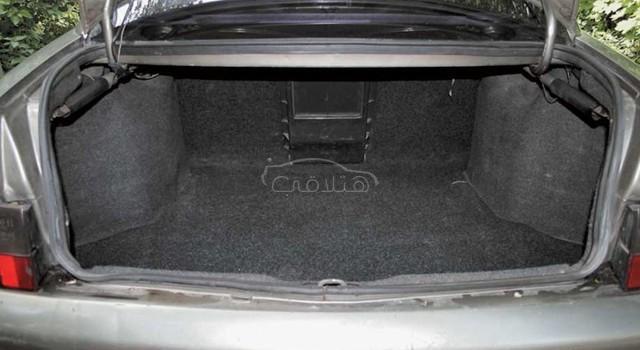
The Egyptian version of the car comes with equipment that includes optional air conditioning, two electric windows with a central locking system, an engine speedometer, a car trouble computer, and an inside and outside trunk opening system, along with four headrests, a rear seat armrest, a movable steering wheel, side mirrors with internal control, interior reading lights, and a dashboard drawer. The bumpers are body-colored and reinforced with steel interior reinforcements, a front console, an advanced instrument panel, a heat-resistant rear window, and standard and metallic colors, as well as rust-resistant paint.
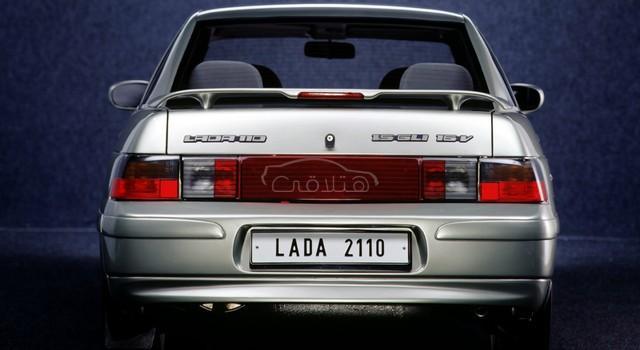
The Russian version comes with optional air conditioning, four electric windows with a central locking system, an engine speedometer, a car trouble computer, an inside and outside trunk opening system, four headrests, and a Rear seat, power steering, power mirrors with interior control, interior reading lights, dashboard drawer, rear spoiler with stop light, body-colored bumpers with front console, advanced instrument panel, heat-resistant rear window, standard and metallic colors, and anti-rust paint.